
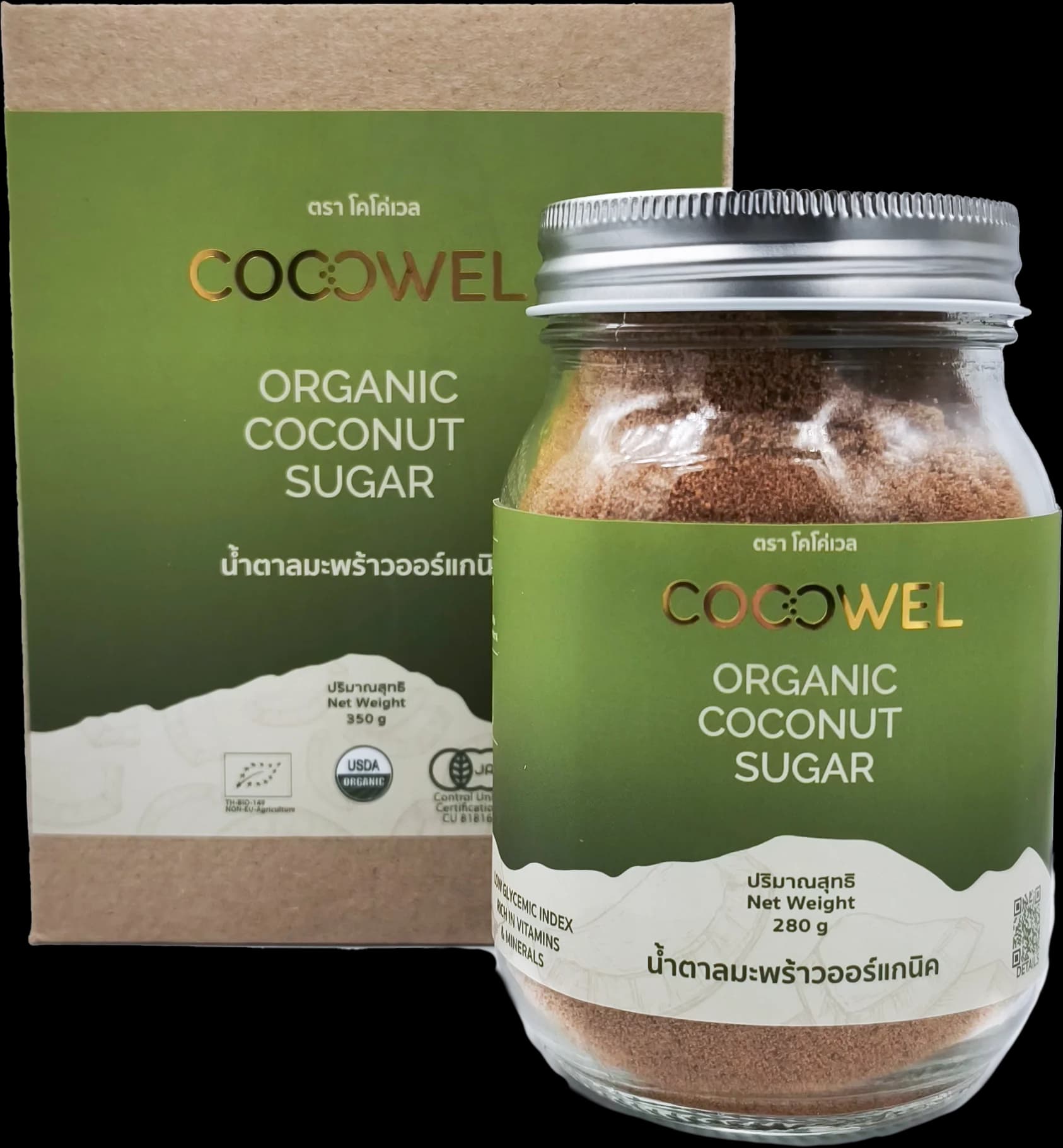
Blossom · Unrefined
Coconut Sugar
Low glycemic index 35.
from ฿295
By COCOWEL · Published
Coconut sugar releases glucose more slowly (published glycemic index 35 against cane sugar's 65), carries measurably more minerals (343 mg calcium per 100 g against about 1 mg), and skips refining entirely. It is still sugar — about 92 g of sugars per 100 g — so the honest framing is 'a better sugar', not 'not sugar'.
GI ranks how fast a food raises blood glucose against pure glucose at 100. Table sugar sits around 65; coconut blossom sugar's published reference value is 35. A lower GI means a slower, flatter rise — meaningful if you're paying attention to energy stability across a morning.
What it doesn't mean: license for quantity. The total sugars are nearly identical to cane sugar. Anyone managing blood glucose should be guided by their doctor, not by a comparison article — ours included.
Refining strips cane sugar to sucrose and nothing else: about 1 mg of calcium per 100 g remains. Our blossom sugar, measured on lot 21101277, holds 343 mg calcium, 1.53 mg iron, 110 mg sodium and traces of zinc and copper — the minerals of the sap it was simmered from.
Open-kettle simmering is the whole process. Nectar is tapped from the unopened flower each morning, reduced over heat, and crystallises on its own. No bleaching, no bone char, no anti-caking agents.
Swap it one for one wherever brown sugar goes. It dissolves slightly slower, caramelises readily, and brings a toffee depth that white sugar can't — bakers usually notice the upgrade in cookies and crumbles first. In coffee it behaves like an unrefined demerara.
Low glycemic index 35. Every figure in this article is measured on this product's own lots.