
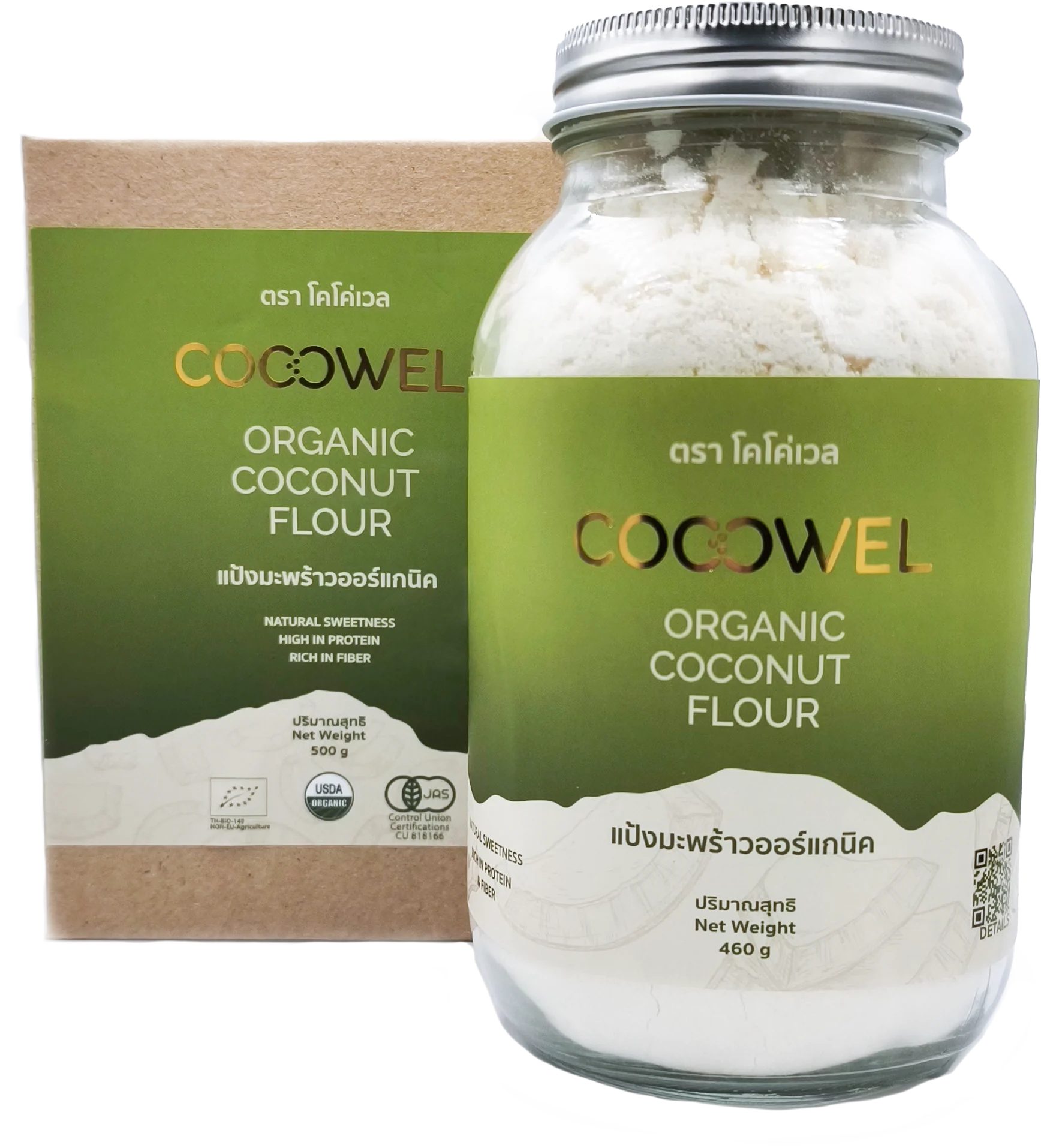
Virgin · Gluten-free
Coconut Flour
Forty-one percent fibre.
from ฿225
By COCOWEL · Published
Coconut flour is the fibre flour: 40.7 g per 100 g (measured, lot 21111262) against almond's roughly 10 g, nut-free, and a fraction of the fat. Almond flour is the richness flour: more fat, slightly lower net carbs (~10 g vs our ~20 g per 100 g), and a texture closer to wheat. Both are gluten-free; they are not interchangeable cup for cup.
Per 100 g, our coconut flour measures 40.7 g dietary fibre, 17.0 g protein and 13.1 g fat (lot 21111262). Almond flour typically publishes around 10 g fibre, 21 g protein and 50 g fat. Energy follows the fat: roughly 430 kcal for coconut flour, near 580 kcal for almond.
Net carbs — total carbohydrates minus fibre — land around 20 g per 100 g for coconut flour and 10 g for almond. Both sit far below wheat flour's ~73 g, which is why low-carb baking reaches for either.
The single most common coconut-flour failure is treating it like wheat. All that fibre drinks liquid: recipes need noticeably more egg and moisture, and a straight 1:1 swap produces something closer to a brick than a cake.
The working rules: replace up to a quarter of the wheat flour in a familiar recipe without other changes, or use recipes written for 100% coconut flour, which already carry the extra eggs and liquid. Almond flour is more forgiving structurally but browns fast and adds oil to everything it touches.
Almond flour is a tree-nut product — off the table for nut-allergic households and many school lunchboxes. Coconut flour is nut-free in the culinary sense and naturally gluten-free. (Anyone with a specific coconut allergy should avoid it.)
Ours has one more difference from most on the shelf: it's milled from fresh raw coconut meat, not from the defatted press cake left over after oil extraction — the reason the natural sweetness is still there.
Forty-one percent fibre. Every figure in this article is measured on this product's own lots.