
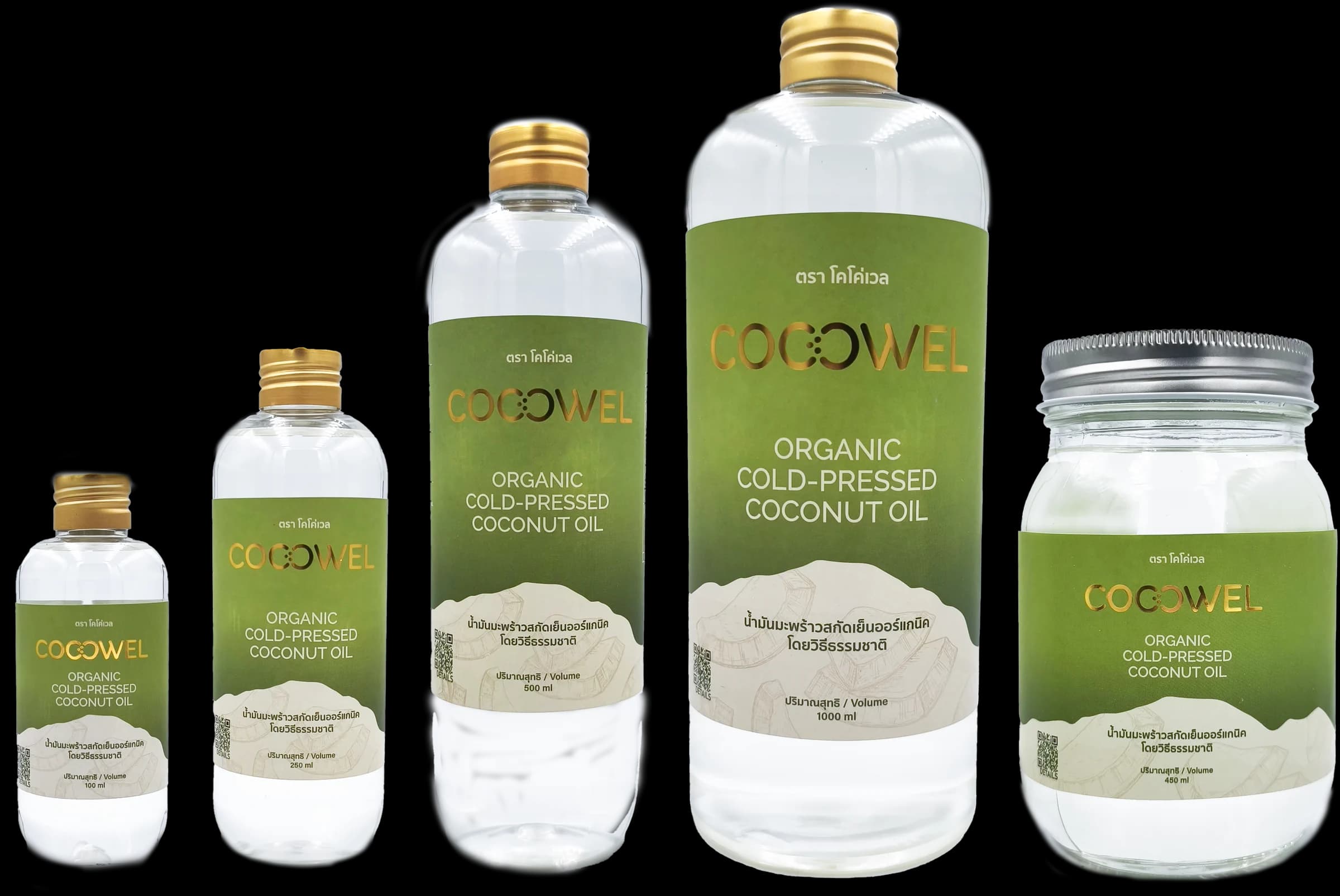
Cold-pressed
Coconut Oil
12 coconuts to one liter.
from ฿125
Three things decide what is in the bottle: whether the oil is virgin or refined, how it was pressed, and who audited the claims. 'Virgin' or 'extra virgin' means the oil came from fresh meat and was not bleached or deodorised; 'cold-pressed' means no added heat in extraction; a certification mark means a third party inspects the farm and the plant every year. Everything else on the front is design.
Refined coconut oil — sometimes labelled RBD, for refined, bleached, deodorised — is pressed from dried copra and then cleaned up with heat and filtering. It is neutral in taste and smell, and it is the cheapest form. There is nothing dangerous about it; there is also nothing of the coconut left in it but the fat.
Virgin oil is pressed from fresh meat and left alone. It smells and tastes of coconut, because nobody removed the aroma. 'Extra virgin' has no separate legal definition for coconut oil the way it does for olive oil; producers use it to signal the freshest, least-handled grade. Ours is virgin oil from fresh milk, and we print the process rather than lean on the adjective.
'Expeller-pressed' describes a mechanical screw press; the friction alone can warm the material considerably. 'Cold-pressed' means the process kept temperature low, with no heat added — a claim worth asking about, since the term has no single regulated threshold.
The clearest word on a label is 'centrifuged': it means the oil was separated from fresh milk by spinning, not by heating or fermenting the milk. That is the process behind our bottle, followed by vacuum drying — described step by step in the article on how the oil is made.
A certification logo is only worth something if someone checks. USDA Organic, EU Organic and JAS (Japan) each require an annual third-party audit of the farms and the processing plant, with a certificate you can ask to see. Halal certification audits the plant and the inputs. These are the marks we carry, and the certificates are available on request.
Words like 'natural', 'pure', 'premium' and 'traditional' are not audited by anyone. They are not lies; they are just not information.
Moisture and smoke point tell you how an oil was finished and how it will behave in the pan, and almost no label carries either. Our lot 2461225 measures under 0.01 g of moisture per 100 g, and the smoke point was measured at 202°C. If a producer cannot tell you those two figures for the lot in your hand, that is an answer too.
The lot number itself is the most useful thing on the back. It is what connects the bottle to a laboratory report — ours are quoted on every product page.
12 coconuts to one liter. Every figure in this article is measured on the product itself — the lab lots are printed on the page.